Film production workflow is the process that moves a project from development to delivery. It covers planning, shooting, post-production, and final handoff. For studios and production teams, a clear workflow makes it easier to keep schedules, crew, equipment, budgets, and files under control as the project moves forward.
Studio Hero is designed for film, TV, and video teams that need one place to manage production operations. It brings scheduling, crew, equipment, budgets, and assets together, so teams can run projects with less manual coordination.
What Is a Film Production Workflow?
A film production workflow is a structured sequence of operational stages, tasks, decisions, and handoffs that govern how a film or video project moves from idea to finished deliverable. It is not just a timeline. It is the system that connects creative decisions to logistical execution.
Most film production workflows follow 5 stages, from development and pre-production through production, post-production, and final delivery.
- Development – concept, script, financing
- Pre-Production – planning, scheduling, crew, equipment
- Production – principal photography, on-set operations
- Post-Production – editing, sound, color, VFX
- Distribution and Delivery – export, delivery, archiving
Each phase has its own set of operational requirements, responsible departments, and critical dependencies. A breakdown in any one phase cascades into every phase that follows. This is why production teams that treat workflow management as a discipline, not just a checklist, consistently deliver better results on tighter margins.
While most productions follow the same broad phases, the day-to-day workflow changes depending on the type of film production and the way the studio operates.
Phase 1: Development
Development is where a film production workflow begins. It is the phase where raw ideas are shaped into viable projects with confirmed creative direction, attached talent, and secured or structured financing.
Key Activities in Development
Script and Concept Refinement
The script is the foundational document that every downstream workflow decision depends on. Scene count, location requirements, cast size, and production complexity all derive from the script. A locked script is a prerequisite for any serious pre-production planning.
Financing and Budget Framing
Development teams structure the financing model during this phase, whether that is studio funding, independent financing, co-production deals, or grant funding. The budget frame established here sets the constraints that every other phase must operate within.
Rights and Legal Clearance
Intellectual property rights, location agreements, music rights, and talent deal structures are initiated during development. Unresolved legal issues at this stage become expensive production delays later.
Greenlight Decision
The greenlight is the formal decision to move a project from development into pre-production. It signals that creative, financial, and legal foundations are stable enough to commit production resources.
Development is the phase that receives the least operational attention in most workflow guides, but it is where the most consequential decisions happen. A poorly developed project creates pre-production problems that no amount of scheduling software can fix.
Phase 2: Pre-Production
Pre-production is the most operationally intensive phase of a film production workflow. Every hour invested in pre-production directly reduces cost and risk during principal photography. This is where production management discipline has the greatest leverage.
Script Breakdown
A script breakdown is the systematic process of identifying every production element required to shoot each scene. This includes cast, extras, props, wardrobe, locations, vehicles, special effects, and equipment. The script breakdown feeds directly into the production schedule and budget.
A detailed script breakdown typically produces:
- Scene-by-scene element lists
- Location requirements per scene
- Cast and crew requirements per shooting day
- Equipment needs per scene type
Inaccurate script breakdowns are one of the most common causes of budget overruns in independent film production. When the breakdown misses elements, those costs surface on set where they are three to five times more expensive to resolve.
Production Scheduling
Production scheduling translates the script breakdown into a shooting schedule that sequences scenes in the most logistically and economically efficient order. This is rarely the same order as the script. Scenes are grouped by location, cast availability, daylight requirements, and equipment usage to minimize company moves and maximize shooting days.
A professional studio scheduling process accounts for:
- Cast and crew availability windows
- Location access and permit timelines
- Equipment availability and rental windows
- Weather dependencies for exterior shots
- Union and guild rules governing working hours and turnaround
Studio Hero’s scheduling module gives film production teams a centralized scheduling environment where crew availability, equipment assignments, and location blocks are managed in one place, eliminating the fragmented spreadsheet workflows that create double bookings and missed conflicts.
Crew Hiring and Management
Pre-production is when the full production crew is assembled. Department heads are hired first, and they in turn build their own teams. Crew management at this stage involves contract negotiation, availability confirmation, rate agreements, and onboarding.
Key crew positions hired during pre-production include:
- Director of Photography and camera department
- Production Designer and art department
- Sound Mixer and sound department
- First Assistant Director and production management team
- Department heads for costume, makeup, and special effects
Managing freelance crews across multiple productions requires a system that tracks availability, contracts, rates, and communication in one place. Freelance crew management best practices for film productions is a topic that connects directly to how Studio Hero handles multi-production crew workflows.
Location Scouting and Management
Location scouting identifies physical spaces that match the creative requirements of each scene. Location managers negotiate access agreements, secure permits, and coordinate logistics for company moves between locations.
Location management in pre-production involves:
- Scouting reports with photography and logistics notes
- Permit applications and council approvals
- Location agreements and insurance requirements
- Tech scouts with department heads
Equipment Planning and Sourcing
Camera packages, lighting rigs, grip equipment, sound packages, and specialized gear are all planned and sourced during pre-production. Equipment planning involves assessing what the production owns, what needs to be rented, and what needs to be purchased.
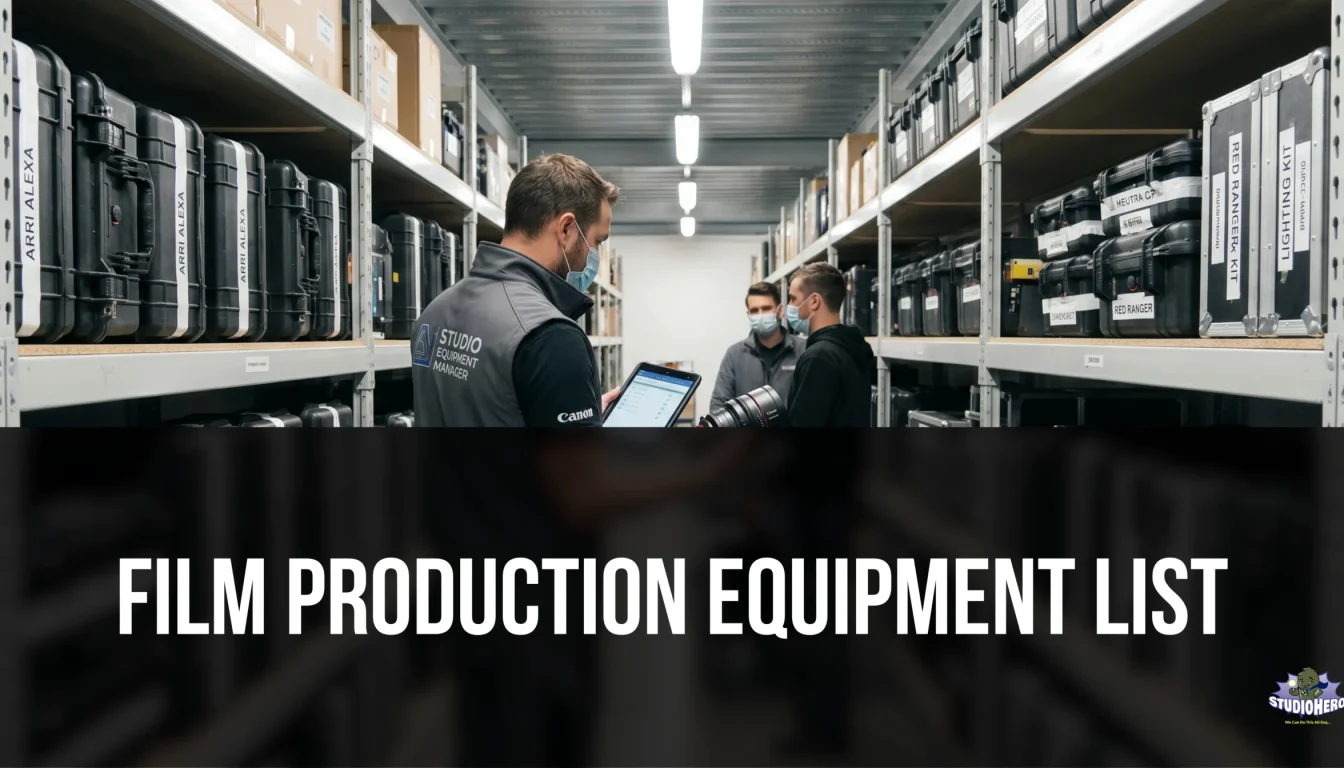
Effective equipment tracking during pre-production prevents the costly situation of arriving on set without critical gear or discovering that rented equipment was double-booked. Studio Hero’s equipment management module tracks owned and rented assets, assigns gear to specific shooting days, and flags availability conflicts before they become set problems.
Budget Development and Cash Flow Planning
The full production budget is built during pre-production. A production budget is not a static document. It is a living financial instrument that tracks actual spend against projected costs throughout the entire production workflow.
A complete film production budget covers:
- Above-the-line costs: writer, director, producers, lead cast
- Below-the-line costs: crew, equipment, locations, catering
- Post-production costs: editing, sound, color, VFX, music
- Contingency: typically 10 percent of total budget
Film production budget templates and cost tracking frameworks represent a content area that expands on the financial management dimension of production workflow for Studio Hero’s audience.
Call Sheets and Production Paperwork
The First Assistant Director prepares daily call sheets that communicate the shooting schedule, cast and crew call times, location details, and scene information for each production day. Call sheets are the operational heartbeat of a film set.
Pre-production also generates:
- Production breakdowns and one-liners
- Shooting schedules and day-out-of-days reports
- Contact sheets and crew lists
- Safety documents and risk assessments
Phase 3: Production (Principal Photography)
Principal photography is when the project moves from planning to execution. The camera rolls, the crew is on set, and every hour of shooting costs real money. A production workflow that was well-designed in pre-production becomes executable on set. One that was poorly planned creates daily crises that bleed the budget.
On-Set Workflow Structure
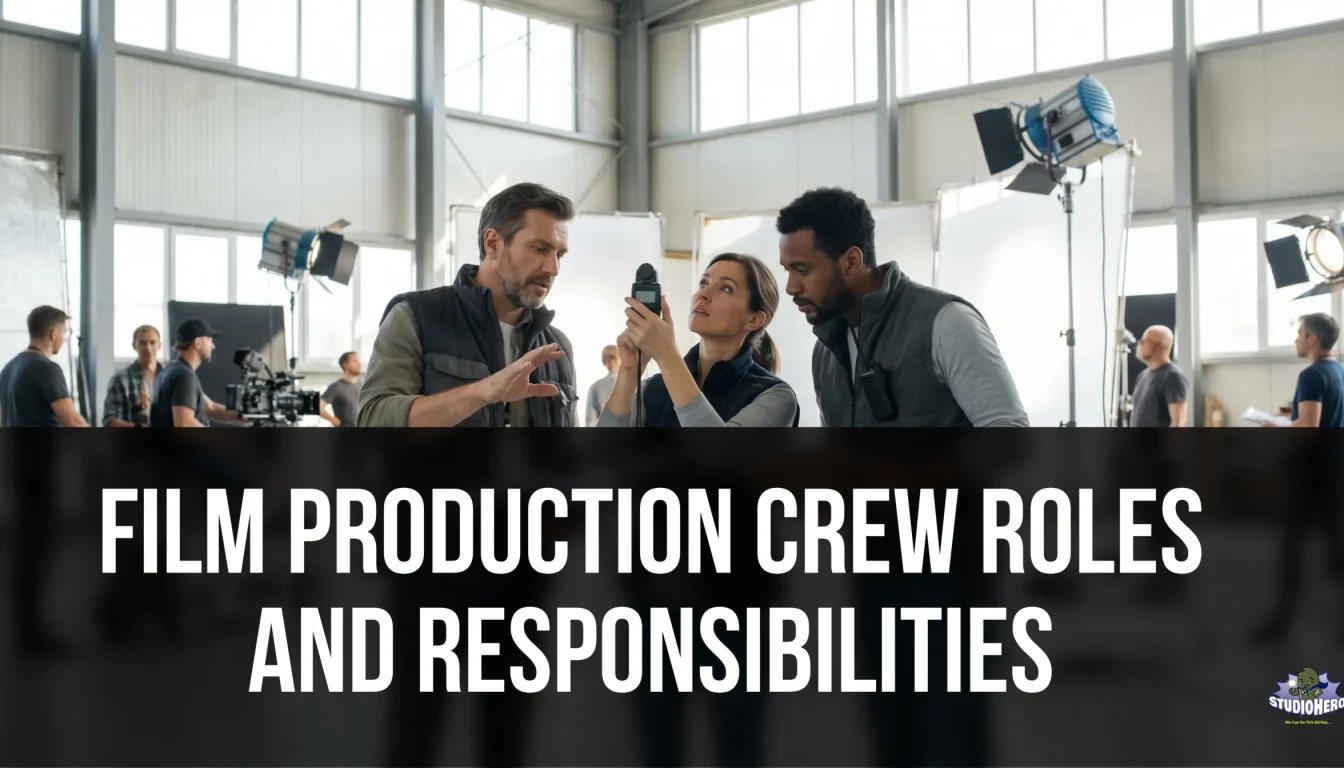
A film set operates through a clear hierarchy of communication and decision-making. The Director leads creative decisions. The First Assistant Director runs the set operationally, managing the shooting schedule, calling for department readiness, and maintaining pace. The Production Manager or Line Producer monitors budget and logistics from the production office.
A typical shooting day follows this pattern:
- Crew call time and set preparation
- Camera and lighting setup for first scene
- Rehearsal with cast
- Camera blocking and lighting refinement
- Final checks across departments
- Principal photography of the scene
- Scene wrap and move to next setup
- Company move to next location if required
- End of day wrap and equipment security
Daily Production Reporting
Every shooting day generates a production report that documents what was shot, how many setups were completed, how many scenes were covered, and how the day tracked against the scheduled plan. Daily production reports are critical documents for budget tracking and schedule management.
A daily production report includes:
- Scenes scheduled versus scenes completed
- Pages scheduled versus pages shot
- Cast and crew hours
- Overtime and additional costs
- Camera and sound roll counts
- Notes on schedule changes or issues
Equipment Management on Set
On a live film set, equipment accountability is a constant operational requirement. Camera packages, lenses, lighting fixtures, grip equipment, and sound gear move between setups throughout the day. Missing or damaged equipment directly impacts the shooting schedule.
Studio Hero’s studio equipment management system tracks equipment status in real time, so production coordinators always know what is on set, what is in transit, and what is in storage. This level of inventory management for production equipment prevents the expensive delays that come from unaccounted gear.
Managing Cast and Crew on Production Days
Cast scheduling on a live set is a high-stakes logistics operation. Actors have contractual turnaround requirements, work hour limits, and availability windows. Missing a cast call or holding an actor beyond their contracted hours carries financial and legal consequences.
Crew scheduling during production must track:
- Daily call times by department
- Turnaround compliance between shooting days
- Overtime accumulation and threshold alerts
- Unit splits when shooting multiple scenes simultaneously
Petty Cash and On-Set Financial Management
Productions run daily petty cash operations to cover on-set purchases, catering costs, location fees, and incidental expenses. Without structured petty cash management, these costs accumulate invisibly and create budget reconciliation problems in post-production.
Studio Hero gives production accountants and coordinators a structured system for tracking on-set expenditure, reconciling petty cash floats, and maintaining a real-time view of spending against budget.
Phase 4: Post-Production
Post-production is where the raw footage is transformed into the finished film. It is a complex workflow involving multiple specialist departments working in sequence and sometimes in parallel, all coordinating toward picture lock and final delivery.
Editorial Workflow
The editorial process begins during principal photography when the editor assembles a rough cut from each day’s footage. The editor works with the Director to shape the story, adjusting pacing, structure, and performance choices through successive cuts.
The editorial stages in a standard post-production workflow are:
- Assembly cut: All footage assembled in script order
- Rough cut: Editor’s initial creative pass with scene selections made
- Fine cut: Director’s input integrated, structure refined
- Picture lock: Final edit approved, no further changes to timing or structure
Picture lock is the critical milestone that gates all other post-production departments. Sound, music, VFX, and color grading all begin their final work from picture lock.
Sound Post-Production
Sound post-production involves dialogue editing, automated dialogue replacement (ADR), sound effects design, foley recording, and final mixing. This is one of the most time-intensive phases of post-production and is often underestimated in both time and budget allocation.
Sound post-production workflow includes:
- Dialogue editing and cleanup
- ADR sessions for performance replacement or enhancement
- Sound effects design and library sourcing
- Foley recording for footsteps, props, and environmental sounds
- Music editing and score integration
- Final mix in stereo, 5.1, and immersive audio formats as required
Visual Effects and Color Grading
VFX work ranges from invisible effects like wire removal and screen replacement to complex digital environments and creature work. VFX teams work from picture lock to deliver composited shots that cut back into the finished timeline.
Color grading is the final creative pass on the image, where the colorist shapes the visual tone and consistency of the film under the Director of Photography’s supervision.
Post-production studio management requires a system that can track the status of individual shots, manage vendor deliverables, and maintain version control across a large number of digital assets.
Media Asset Management in Post-Production
Post-production generates enormous volumes of digital assets. Raw footage files, proxies, exports, sound files, VFX deliverables, and music stems all need to be organized, tracked, and protected. A media asset management system ensures that assets are accessible to the right people at the right time without version confusion or file loss.
Studio Hero’s media asset management module gives post-production teams a structured environment for organizing production assets, tracking deliverable status, and maintaining the chain of custody for all project files from principal photography through final delivery.
Post-Production Scheduling and Budget Tracking
Post-production schedules are complex because multiple workstreams run in parallel across different vendors and facilities. Editorial, sound, VFX, and color may all be happening simultaneously with interdependent delivery milestones.
Post-production scheduling and vendor management for film projects is a workflow area where Studio Hero’s production management tools provide direct operational value, tracking milestones, deliverables, and costs across the full post-production pipeline.
Phase 5: Distribution and Delivery
Distribution and delivery is the final phase of the film production workflow. It is where the finished film is prepared for release across theatrical, broadcast, streaming, and digital platforms. Each platform has specific technical delivery requirements that must be met precisely.
Delivery Requirements and Technical Specifications
Major streaming platforms, broadcasters, and distributors publish detailed technical delivery specifications that govern:
- File format and codec requirements
- Resolution and frame rate specifications
- Audio format and loudness standards
- Subtitle and closed caption file formats
- Metadata and artwork requirements
Failure to meet delivery specifications results in rejected deliverables and delays that carry real financial consequences, particularly when release dates are tied to marketing campaigns.
Archiving and Asset Preservation
Once a project is delivered, the production archive becomes a long-term asset. Properly organized archives allow productions to:
- Respond to future format changes and re-delivery requests
- Support secondary market licensing and sales
- Access footage for sequel or spin-off productions
- Comply with contractual archive obligations
A structured studio operations management approach treats the archive not as an afterthought but as a deliverable in its own right, with defined organization, redundancy, and access protocols.
Common Film Production Workflow Breakdowns
Understanding where film production workflows fail is as important as understanding how they should function. The most expensive problems in production are rarely creative. They are operational.
Fragmented Communication Systems
When production information lives across email threads, WhatsApp groups, shared drives, and spreadsheets, critical updates fail to reach the right people. A location change communicated via email but not reflected in the scheduling system means crew showing up at the wrong place. These failures are not just inconvenient. They cost real money every time they happen.
Schedule Conflicts That Surface on Set
Crew scheduling conflicts that were not identified during pre-production become set emergencies during production. An actor double-booked across two productions, a key crew member whose turnaround was not calculated correctly, or equipment assigned to two units on the same day creates immediate operational crises.
Budget Tracking Gaps
Production accounting that relies on manual reconciliation creates a dangerous lag between actual spending and reported position. By the time a budget overrun is visible in the accounts, the production has already committed to the spend. Real-time production budget tracking and cost control is a workflow capability that separates professionally managed productions from those that finish significantly over budget.
Equipment Accountability Failures
Shared equipment tracking mistakes are particularly costly in productions that operate multiple units or share gear between productions running simultaneously. Equipment that cannot be located, gear returned damaged without documentation, or rental periods extended because of poor tracking all translate directly into avoidable costs.
Production Tracking Gaps
Production tracking gaps happen when there is no single system of record for what has been shot, what remains, and how the actual schedule is tracking against the plan. Without this visibility, producers cannot make informed decisions about schedule adjustments or resource reallocation.
How Studio Management Software Closes Workflow Gaps
A professional film production workflow requires a system that connects every operational function across every phase. Spreadsheets can document a workflow. They cannot manage one.
Studio Hero is built as an all-in-one production management software specifically for film, TV, video, and creative production teams. Every module addresses a specific workflow requirement:
| Workflow Requirement | Studio Hero Module |
|---|---|
| Crew availability and scheduling | Studio Scheduling |
| Equipment planning and tracking | Equipment Management |
| Budget development and tracking | Studio Budgeting |
| Invoicing and financial management | Studio Invoicing |
| Media asset organization | Media Asset Management |
| Crew hiring and management | Crew Management |
| Inventory and asset tracking | Inventory Management |
| Production operations oversight | Production Management |
When all of these functions operate within one connected system, production teams gain something that no combination of individual tools can deliver: a single operational view of the entire production workflow, from development through delivery.
Productions using Studio Hero do not manage their workflow across disconnected tools. They manage it in one place, with every team member working from the same data, the same schedule, and the same financial picture.
Conclusion
A film production workflow is not a document. It is the operational system that determines whether a production delivers on time, on budget, and at the creative standard the project demands. Each phase, from development through delivery, carries its own operational requirements, failure points, and management disciplines.
The production teams that execute consistently are the ones that treat workflow management as a core operational competency, not an administrative burden. They invest in pre-production rigor, maintain real-time visibility during principal photography, and manage post-production as a structured pipeline rather than a creative free-for-all.
Studio Hero gives film and video production teams the operational infrastructure to manage every phase of the production workflow in one connected system. Film and video production management software built specifically for production teams means your scheduling, crew, equipment, budgets, and assets are always aligned, always visible, and always under control.
Frequently Asked Questions
What are the five phases of a film production workflow?
The five phases of a film production workflow are development, pre-production, production (principal photography), post-production, and distribution and delivery. Each phase has distinct operational requirements and handoff points that connect to the next phase.
What is the most important phase of film production workflow?
Pre-production is widely considered the most operationally important phase of a film production workflow. Every hour of planning in pre-production reduces cost and risk during principal photography, where mistakes are most expensive to resolve.
What tools do film production teams use to manage workflow?
Professional film production teams use dedicated production management software to manage scheduling, crew, equipment, budgets, and assets. Studio Hero is an all-in-one platform built specifically for film, TV, and video production teams that consolidates all workflow management into one connected system.
What causes most film production workflow breakdowns?
The most common causes of film production workflow breakdowns are fragmented communication systems, unresolved schedule conflicts, budget tracking gaps, equipment accountability failures, and the absence of a single system of record for production data.
How does studio management software improve film production workflow?
Studio management software improves film production workflow by replacing disconnected spreadsheets and communication tools with a single platform where scheduling, crew management, equipment tracking, and budget monitoring operate on shared, real-time data. Studio Hero is designed specifically for this purpose, connecting every operational function across the full production lifecycle.
What is picture lock in post-production?
Picture lock is the milestone in post-production at which the final edit is approved and no further changes are made to timing or structure. It is the gate that allows sound, VFX, and color grading departments to begin their final work.
How long does a film production workflow take?
Film production workflow duration varies significantly by project scale. A short film may complete the full workflow in weeks. A feature film typically spans six months to several years from development through distribution. A television series operates multiple simultaneous workflow cycles across episodes and seasons.